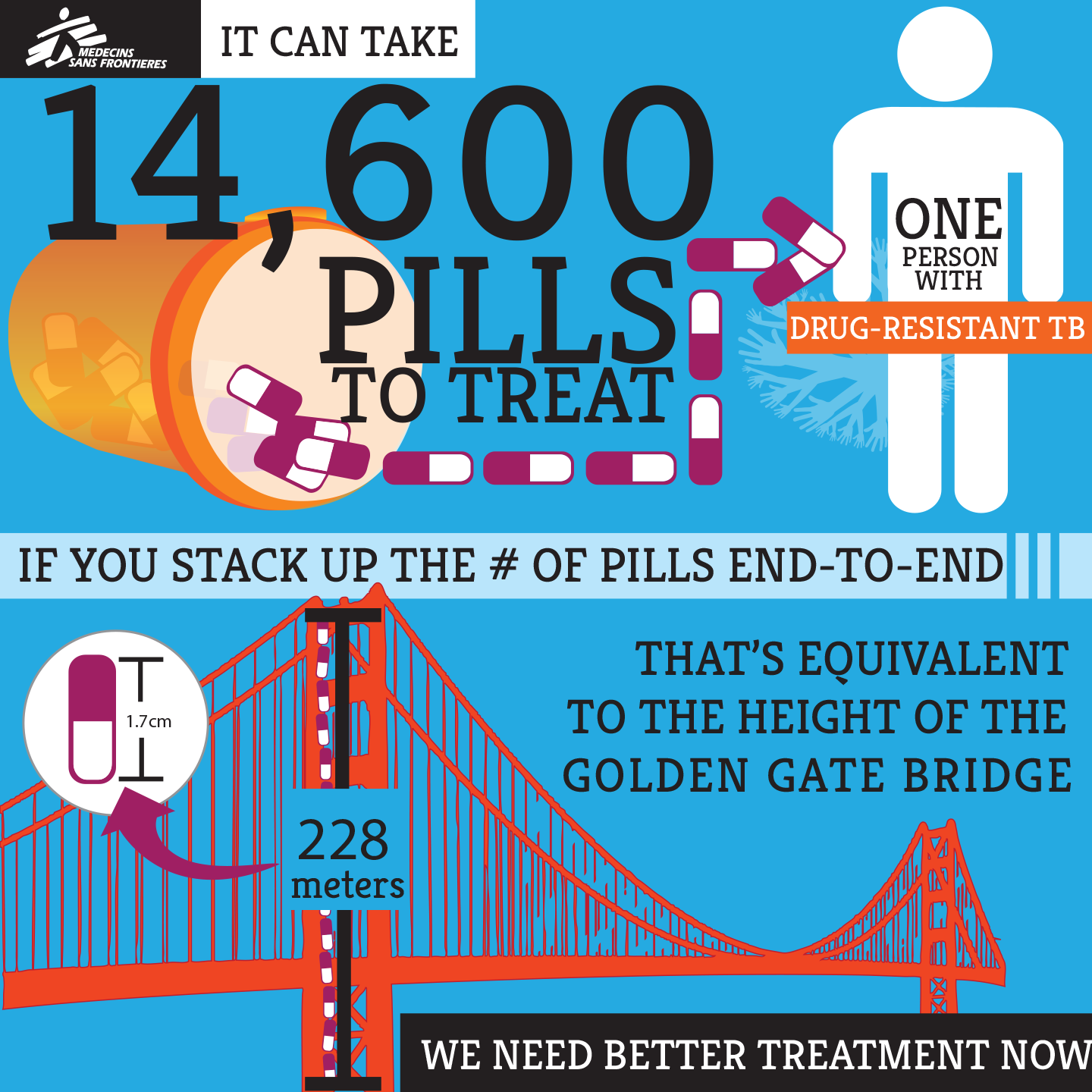
Mycobacterium is a bacteria that causes tuberculosis in humans. Tuberculosis normally attacks the lungs, but can attack other parts of the body as well. Tuberculosis is spread through airborne droplets from an infected person. Tuberculosis can be life-threatening if not treated. According to the CDC, in 2017 10 million people around the world became sick from TB. Also according to the CDC, TB is the number 1 infectious disease killer worldwide.
When TB is not properly treated, some forms become resistant to medication. An example of this is, when people do not take their medication correctly, or if a doctor prescribes the wrong medication, etc. MDR-TB stands for multi-drug resistant TB. MDR-TB can be dangerous because it is very hard to treat.
XDR-TB stands for extensively drug resistant TB. XDR-TB is even more dangerous than MDR-TB because it is resistant to all of the same drugs as MDR-TB, plus more. Both of these drug-resistant forms of TB can be spread from person-to-person which causes a big health risk.
According to the CDC, India is one of the most common places for drug-resistant TB in the world. Greater TB control, improved detection, and efficient treatment is what can help stop drug-resistant TB from growing even more.
Treatment used for drug resistant TB takes up to 2 years to complete. In 2012, the first new drug-resistant medication in over 40 years was approved safe and effective by the FDA. These treatments are known to causes severe side effects. Some common side effects include hearing loss, hypothyroidism, and renal impairment. These side effects are a result of doctors having to prescribe more potent medications, because safer medications aren’t effective. Only about 12% of MDR-TB patients, and 6.8% of XDR-TB patients receive a cure.
All of these treatments, unfortunately, come at a very high cost, putting families in a financial crisis. In 2017, the average cost of treating MDR-TB patients was $164,000, and the cost of treating XDR-TB patients was $526,000. Those numbers are insane! Most families don’t make that much money in multiple years, let alone have that much to spend on one treatment! When people don’t have the money to treat their TB, it has time to spread to other people. Why are pharmaceutical companies charging so much for a medication that could save someones life? Also, most patients don’t receive a cure, but still have to pay so much for no positive effect. I understand that it takes a lot of money to make a new drug, but a human life is something you can’t put a price on.
HPV stands for human papillomavirus. The HPV vaccine is said to prevent many types of cervical, penile, head, and neck cancers caused by HPV. According to Yale Medicine, HPV causes about 43,000 new cases of cancer each year.
HPV is spread through vaginal,oral, and anal sex as well as skin-to-skin contact during sexual activity. HPV is the most common STD in the United States today. HPV can cause warts, lesions, etc. According to the CDC, about 73 million Americans are infected by HPV. But, the HPV vaccine is also one of the most expensive on the CDC’s recommended vaccinations list.
The CDC recommends boys and girls get 2 doses of the HPV vaccine between ages 11-12 ( if you wait until age 15 to get the vaccine, you have to get 3 doses) but the vaccine is approved up to age 45.
There were many different clinical trials done to test the effectiveness and safety of the HPV vaccine. Some companies tested Gardisil, while other tested Cervarix. Gardisil was the only vaccine that ended up getting approved (in 2006) . A majority of these studies started in 2004 and ended around 2009. The age of participants ranged from adolescents to adults.
One of the outcomes of these studies showed that this vaccine evoked a strongest immune response in the body. Today the CDC and FDA have marked the HPV vaccine safe, and for the most part, effective.
For example, in one study, out of 1602 participants that received the vaccine, there was an incidence rate of 0.0006. While, in another study with 1601 participants, there was an incidence rate of 0.2. As I said, there were many, many trials taking place, and though the results varied a little through the different trials, they all came to the same conclusion that getting the vaccine lead to a lower incidence rate than not getting the vaccine.
Gardasil has recently been reported for major side effects. Some of the most reported include menstrual abnormalities and premature ovarian failure. In 2017, almost half of people aged 12-17 were vaccinated for HPV. According to MedAlerts, since April 2018, there have been 58,992 reports of HPV vaccine reactions, hospitalizations, and deaths. Over 45% of the reactions occurred in patients 12-17 years of age. Because the vaccine is new, it is hard to know for sure, the end outcome.
This vaccine was deemed safe by the CDC, and FDA. Although, because this is a relatively new vaccine, we don’t know all of the side effects, and negative consequences of it. Most recently people have been bringing up negative outcomes of this vaccine. But, I believe if the government thought this vaccine did more harm then good, they would remove it from the market.
Also, this vaccine in my personal opinion is more of a personal choice than other vaccines. Other vaccines keep you safe from infectious diseases that you can’t control, and keep others safe. HPV is preventable by abstinence, or by knowing who your partner has been with. I don’t see the point of getting vaccinated until you become sexually active. Not getting vaccinated does not hurt anyone else, but yourself.
In conclusion, do your research, think about your personal opinions and experiences, and make the decision for yourself.
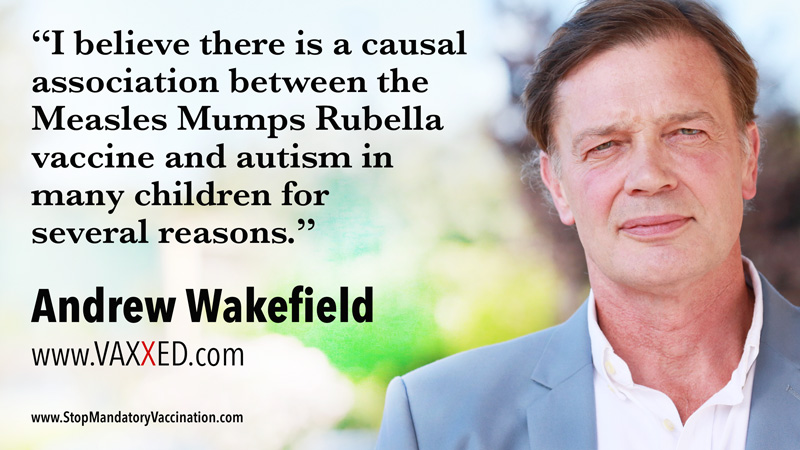
Andrew Wakefield is a gastroenterologist and surgeon. He was born in Britain and become a physician in London.
Wakefield is well known for his accusation that the Measles-Mumps-Rubella (MMR) vaccine causes autism.
In 1995 a group of parents thought their children had gotten autism from the MMR vaccine, so Wakefield decided to investigate. Wakefield had a hunch that if this vaccine caused inflammation in the children’s intestines, this could lead to leaky gut syndrome, which could cause harmful proteins to make it to the brain.
In 1998 Wakefield and others published a study which said that they found inflammatory bowel syndrome in 12 autistic children that had gotten the MMR vaccine. With this study being published, a anti-vaccine movements broke out all over the world.
Several years ago, 10/13 co-authors of Wakefield’s book renounced the conclusion made in their study. In 2010, the article publication was revoked.
Wakefields hypothesis stated that children who had the MMR vaccine experienced behavioral changes after being vaccinated, along with intestinal abnormalities.
This experiment was done on 12 children (11 of which were boys) ranged 3-10 years in age. The children were admitted by their parents who thought they had developed autism from the MMR vaccine. All children were also thought to have intestinal abnormalities. The children were kept for a week to be examined.
The experimental process was as follows…
12 children were admitted
Histories were taken of each child
Ileocolonoscopy’s were performed (with biopsies taken)
No neurological abnormalities were detected. MRI and EEG were both normal. CSF was also normal
Developmental records seemed to be normal in all the boys
The one girl was said to be developmentally slow compared to her older sister
5/12 had an early reaction to the vaccine
Urinary test abnormal in all 8 children that were tested
Colon normal in 4 children, and abnormal in 8 children.
Ileum abnormal in 9 children
8/12 were diagnosed (by parent or physician) with the onset of their behavioral symptoms being linked with the time they got vaccinated with MMR
” In most cases, onset of symptoms was after measles, mumps, and rubella immunization.”
A double-blind study is a study in which neither the participants, or the experimenters know which patients receive the treatment. This technique is used to prevent bias in the results. This is seen as a very effective tool in researching today. This kind of study was not used in Wakefield’s experiment.
Wakefield did seem to follow most guidelines of the scientific method (making an observation, holding an experiment, drawing a conclusion from the results, etc.) but did not use some vital parts. For example, Wakefield did not use a wide range of age or gender of the participants. Another example is that Wakefield did not have a control group. If Wakefield would have used some of the methods he left out, they could have greatly changed his results.
A doctor writing for TIME magazine states that “the vaccine-autism myth is one chilling example of fraudulent science”. Ever since the publishing of Wakefield’s article linking vaccines to autism, many parents have stopped vaccinating their children. Because of this publication the UK experienced more than 12,000 cases of measles, leading to several deaths. Because of social media today, this vaccine hesitancy still persists all over the world. Europe alone had 35 measles related deaths in 2017.
Wakefield, unable to practice as a doctor, is now speaking all over the US, promoting vaccine hesitancy. In the US measles was considered eliminated in 2000. Since then there has been over 2000 cases of measles. Because of the Wakefield paper there has been measles breakouts all over the US including in Florida and Minnesota.
This paper has not only led to vaccine hesitancy for the MMR vaccine, but for all other vaccines as well. A majority of experts in this area have said that Wakefield was wrong and have produced multiple experiments to prove so. Even though the paper was retracted, Wakefield lost his license, and experiments have been done falsifying his claims, the idea that vaccines causes autism will be in peoples minds forever.
In my personal opinion, I don’t know why people still believe this man when there are copious amounts of facts going against him. Vaccine hesitancy is so dangerous for that individual that isn’t getting vaccinated, and for those around them. As I mentioned in my last blog, this is especially dangerous to babies who aren’t old enough to get vaccinated, potentially leading to that babies death. The pros of vaccines overwhelmingly outweigh the cons. Vaccine hesitancy may never be eliminated, but for the health of billions of children in the world, I hope one day it is.
According to Pharmacy Times, “vaccination has been one of the most successful public health interventions in the world”.
Vaccine hesitancy is when parents are hesitant about vaccinating their children for multiple different reasons, even tough vaccinations are available. Some of these reasons include parental concerns about vaccine safety (the stigma around vaccine causing autism), religions that don’t allow vaccines, and overall lack of knowledge of vaccines. Parents not vaccinating their children has started to lead to vaccine preventable disease recurring. Diseases that we prevented decades ago are now starting to pop up again all over the world because of vaccine hesitancy.
According to the World Health Organization, there is no single intervention that will address all reasons of vaccine hesitancy. One of the main ways to combat vaccine hesitancy is simply to inform the public about the risks of not getting vaccinated. Getting vaccinated not only protects yourself, but also the people around you. I personally have a couple immunocompromised friends who have been vaccinated, but if can get severely sick if they’re around people who have diseases that are preventable. Something as simple as not getting the flu shot can cause my type 1 diabetic friend to be put into the hospital. Babies are also at risk of getting sick from non-vaccinated children. Babies don’t have strong immune systems, so if a baby who isn’t old enough to be vaccinated comes in contact with a child who has a vaccine preventable disease, it could cause great harm, or even death to the baby.
A lot of the time there is a specific population/ethnic group/religious group that does not get vaccinated so it is very important to be able to relate to these people and explain risks to them in a respectful way.
Another way to combat vaccine hesitancy is to make them more accessible to those populations that are hesitant. Rural populations might be vaccine hesitant because there isn’t a close doctors office. Bringing vaccinations closer to them might help combat this issue. An example of this is, when my cousin was in nursing school she got to travel to South America and a main part of her trip was vaccinating children who had no other means of getting vaccinated.
The WHO has created a Tailoring Immunization Program to do just these things in hopes of ending vaccine hesitancy.
A vaccine preventable disease that is being impacted by vaccine hesitancy is measles, mumps, and rubella. Children are supposed to get their first MMR vaccine at 12-15 months of age, and their second at age 4-6.
According to the WHO, in 2014 there were 1966 cases of Measles, 15643 cases of Mumps, and 10 cases of Rubella in the Americas.
These are crazy high numbers for disease that are preventable with 2 vaccinations. This is also very dangerous for babies who aren’t old enough to be vaccinated. You can prevent your child from looking like this with 2 simple shots.
Antibiotics are drugs used on humans and animals that fight infections caused by bacteria. when people overuse or misuse antibiotics, bacteria start becoming resistant to the drug. For example, if people take antibiotics when they have a viral infection (antibiotics cannot kill viruses), if people don’t take their antibiotics as instructed, if people use antibiotics from one sickness, for a different one a year later, etc. The antibiotic kills the bacteria that are sensitive to it, leaving the resistant bacteria to grow and reproduce.
According to Texas A&M, “antibiotic resistance is one of the biggest public health challenges of our time”. I agree with Texas A&M, because if people keep using antibiotics improperly, more and more resistant bacteria will grow, eventually leading to resistant bacteria that health professionals cannot treat. Eliminating the threat of antibiotic resistance is a public effort, because if even one person misuses antibiotics, they can spread that antibiotic resistant bacteria to other people. We cannot just make up new antibiotics on the spot, it takes time, and if bacteria becomes resistant faster than we can make antibiotics then we have a big issue. As a society, we should be scare of antibiotic resistance.
Don’t stop taking your antibiotics just because you start to feel better (finish the prescription)
Don’t take antibiotics for viral infections (Flu, cold,etc.)
Don’t save your leftover antibiotics for the next time you get sick
Don’t take someone else’s antibiotics
CRE
CRE stands for carbapenem- resistant- enterobacteriaceae. CRE is a family of certain bacteria that are very hard to treat because they are resistant to carbapenem antibiotics. E.coli is an example of an enterobacteriaceae that lives in everyone’s gut that can become CRE. CRE mainly affects patients in hospital settings who take many different antibiotics. This can be very scary to learn about because if you catch an aggressive CRE and there aren’t any antibiotics to treat it, it could become fatal.
FMT stands for Fecal Microbiota Transplant. FMT is used to treat multiple infections, the most popular one being C. difficile. C. diff occurs when someone is given antibiotics that kill all microbiota in the gut except for C.diff. When all of the other microbiota is killed, C. diff multiplies and takes over, causing sickness. When regular C. diff treatments (antibiotics) don’t work, a FMT is considered. To do a FMT, feces are taken from someone with a healthy microbiota, and transplanted (via enema, or tube) to an unhealthy patient.
MICROBIOTA
Gut microbiota is made up of the communities of microorganisms that live in the digestive track of humans. Microbiota is a relatively new discovery in science so new discoveries, and treatments are being found everyday. Microbiota affects many things in your daily life, which is why it is important to have healthy routines. Many chronic diseases including, obesity, IBD, diabetes, ALD, and more are associated with abbarrant microbiota.
Treatments for infections caused by abbarrant microbiota include antibiotics (these can also worsen the infection), probiotics, dietary controls, and procedures including a FMT. Modifying the microbiota has also been found to help treat cancer.
CRAAP test
C- (current) Both of my sources are currently published in the last couple of years. This isn’t hard to find for this topic, because it is such a new discussion in science.
R- (relevant) Both of my sources are relevant to this topic. Both of the articles were meant to inform the public about this topic. Both of the articles were easy to understand.
A- (authoritative) Openbiome is the organization of one of my sites. The other site comes from a website that has multiple published scientific articles on it. Both of my sources seem to have credible URL’s.
A- (accurate) Both of my sources also have citations to other places they got their information from.
P- (purpose) I feel that the purpose of both of my articles are to inform. Both of my sources have research attached, showing that they are dedicated to this topic and learning about it.









:max_bytes(150000):strip_icc()/vaccine-protection-56a6fccd5f9b58b7d0e5dd75.jpg)





 Allyson's Mcro blog